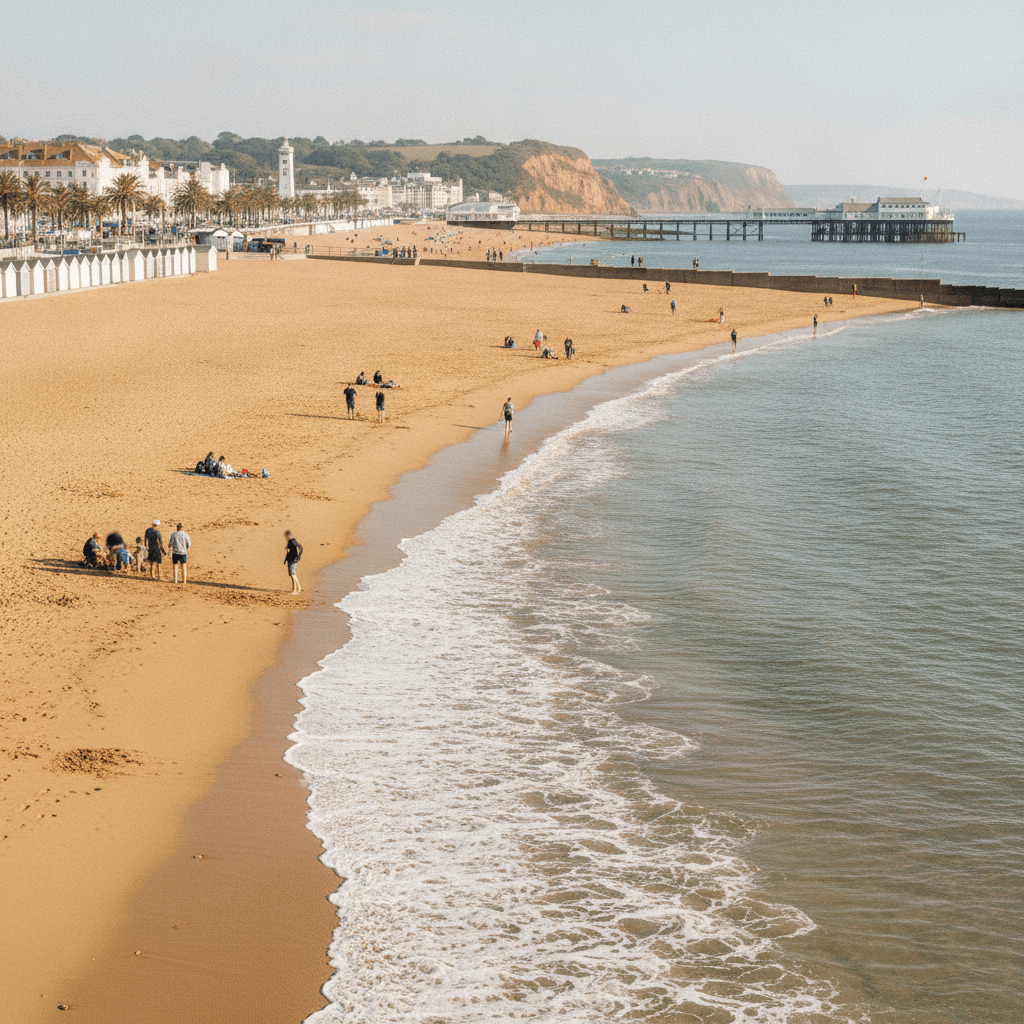

Brixham is a town that lives with the sea, not just beside it. It is a working harbour, a place of trawlers and fish markets and salt on the wind, and that close relationship with the water gives the town its enormous character. It also gives local homes a particular set of cleaning challenges that you simply do not get inland. Salt, damp, hard water and a lot of older, characterful housing all play their part. When people search for cleaners near me in Brixham, they are not just looking for someone with a mop and a bottle of spray. They are looking for someone who understands why their windows film over twice as fast as a friend's house in Exeter, and why the damp corner keeps coming back. The good news is that none of it is unbeatable. With the right approach, a Brixham home can stay every bit as fresh as it deserves to be, sea views and all.
Salt air and the film on your glass
The first thing every Brixham homeowner notices is the glass. Living this close to the sea means salt is carried inland on the breeze, and it settles as a fine, hazy film on windows, conservatories and any glass that faces the water. It is why coastal windows always seem to need doing more often than those a few miles inland, and why they can look smeared again surprisingly quickly. A few practical tips help:
- Clean glass more frequently than you would inland, especially on the sea-facing side of the house.
- Use plenty of clean water to dissolve and lift the salt rather than just smearing it around, then finish with a proper squeegee or a dry microfibre cloth.
- Do not clean windows in full midday sun, as they dry too fast and streak.
- Pay attention to frames and sills too, where salt and grime gather and can mark the paintwork over time.
What most people get wrong here is using too little water. A quick wipe with a damp cloth just moves the salt deposit around and leaves a smear that looks worse in certain light than the film did. The salt needs to be dissolved and rinsed away, not redistributed. On a windy day with the haar coming in off the bay, you can almost see it settling back on the glass as you work, which is frustrating but normal. The answer is not to stop cleaning. It is to clean more regularly and more thoroughly each time, so the build-up never gets thick enough to become a real problem.
Condensation and damp in a coastal climate
The South Devon coast is mild but damp, and Brixham's older housing in particular can be prone to condensation, especially through the cooler months. Warm, moist indoor air meets cold single-glazed windows and solid walls, and the result is streaming glass in the morning and, left unchecked, black mould in the corners and around the frames. Managing it is mostly about routine. Wipe down condensation on the windows in the morning rather than leaving it to soak into the frames and reveals. Ventilate, even briefly, after showers and cooking, and keep furniture a little away from cold external walls so air can move. When mould does appear, it needs treating properly and promptly rather than just painting over, as it will only return. A regular clean that keeps an eye on the usual damp spots stops small patches becoming a real problem.
The spots that catch people out are the ones that are easy to overlook: the top corners of bedroom windows behind the curtain, the reveal of the bathroom window where condensation drips and the paint softens, the back of a wardrobe pushed against an outside wall. These are the areas a cleaner who knows your home will check as a matter of course, and catching a small patch of mould early is far less work than dealing with it once it has spread across a wall.
Hard water and stubborn limescale
South Devon has hard water, and Brixham is no exception. That mineral content leaves chalky limescale on everything water touches: taps, kettles, shower screens, tiles, toilets and around the base of mixer taps. In a coastal town the limescale battle runs alongside the salt one, and it can make bathrooms and kitchens look tired even when they are perfectly clean underneath. The trick is staying on top of it rather than letting it build into hard, crusty deposits that take real effort to shift. A regular wipe of shower screens after use, descaling taps and kettles before the scale gets thick, and using the right limescale-cutting approach on glass and chrome all keep things gleaming. It is exactly the sort of steady, repeated attention that a Regular Cleaning visit is built for.
Narrow stairs and small rooms in the old cottages
Wander the streets that climb up from the harbour and you find Brixham's beloved fishermen's cottages: tight little terraces with steep, narrow staircases, low ceilings and small, snug rooms. They are full of charm, but they ask for a slightly different cleaning approach. Steep stairs need care and sensible kit rather than dragging a heavy machine up and down. Small rooms make every surface and corner count, so clutter shows quickly and good order matters more. And the nooks, alcoves and odd angles that give these cottages their character are exactly the spots where dust likes to settle. It is detailed, careful work, and it rewards someone who knows the house and takes their time over it.
In practice, cleaning a harbour cottage well means working methodically through a series of small spaces rather than opening up a large room and working through it. The kitchen might be galley-sized. The bathroom might be barely big enough to turn around in. Every surface matters more because there is less of it, and the cleaning has to be thorough precisely because shortcuts show. We find that a lighter, more frequent clean suits these homes better than an occasional heavy session, because maintaining good order is far easier than trying to restore it.
Original features that need a gentle touch
Brixham's older homes are often rich in original features, and these deserve respect rather than a blast of strong chemicals. Old timber, painted panelling, traditional tiles, cast-iron fireplaces and period sash windows all need a gentler hand. A few sensible habits protect them:
- Test any new product on an inconspicuous spot before going near a feature you would hate to damage.
- Favour gentle, appropriate cleaners over harsh abrasives on old paint, timber and tiles.
- Dust and clean original woodwork softly, keeping excess water off bare or aged timber.
- Treat period fittings as part of the home's character, worth preserving, not just another surface to scrub.
Cast-iron fireplaces are a particular example. They gather dust in their ornate recesses, and the temptation is to go in with something wet. A soft brush to lift the dust first, followed by a barely damp cloth, is far safer than soaking a surface that can rust if moisture sits on it. The same principle applies to old quarry tiles in a hallway: they need a pH-neutral cleaner and a light touch, not the kind of acidic limescale product you might use in the bathroom next door.
The big sea-facing glass towards Berry Head
At the other end of the spectrum from the harbour cottages are Brixham's elevated, modern homes towards Berry Head, the ones designed around those breathtaking sea views with great expanses of floor-to-ceiling glass. The view is the whole point, which makes keeping that glass clear a genuine priority. It is also where the salt-film challenge is at its most demanding, since large windows in such an exposed position catch the full force of the sea air. Big glass like this really benefits from regular, methodical cleaning with plenty of fresh water and the right technique, so the view stays sharp rather than slowly fogging behind a layer of salt. When the glass is doing the work of framing the bay, it pays to keep it spotless.
When a regular clean is not quite enough
Most of what this article describes is kept under control by a steady, well-done regular clean. But there are moments in any home's life when a deeper reset is what is actually needed, and coastal homes tend to reach those moments a little sooner than their inland counterparts. If limescale has been building for a year or more, if mould has established itself in several spots, or if a property has been left unoccupied through the winter with no cleaning at all, a regular visit is not the right starting point. A Deep Cleaning visit tackles the accumulated build-up first, so that ongoing regular cleans can then keep pace with the coastal environment rather than constantly chasing it.
Similarly, if you are a Brixham landlord handing a property back at the end of a tenancy, the combination of hard water staining, salt film and the general wear of occupancy means an end of tenancy cleaning in Brixham done properly is worth taking seriously. It protects the deposit process and means the incoming tenant starts fresh rather than inheriting someone else's limescale.
FAQ: cleaning in a coastal home
How often should I clean windows in Brixham compared with inland?
As a rough guide, windows in a sea-facing or harbour-side position in Brixham may need cleaning twice as often as an equivalent window a few miles inland. The salt deposits faster in exposed positions and after onshore winds, and leaving it too long means each clean has to work harder. Fortnightly or monthly attention to the glass, rather than a quarterly wash, keeps things manageable.
Is the black mould in my bathroom from the sea air or from the shower?
Almost always from the shower, or from insufficient ventilation generally. Sea air contributes to a damp atmosphere, but bathroom mould in Brixham has the same root cause as bathroom mould anywhere: warm, humid air sitting against cold surfaces. The coastal climate makes the conditions a little more persistent, but improving ventilation and wiping surfaces down after use addresses the problem at its source rather than just treating the symptom.
Can my cleaner use eco-friendly products in a hard-water area?
Yes, though it is worth being realistic. Some eco-friendly products are less effective against heavy limescale than conventional descalers, so if scale has been building for a while, the first session may need a stronger approach to cut through the deposit. Once things are back to a good baseline, gentler products work well for maintenance. Let your cleaner know your preferences at the outset and they can plan accordingly.
I am looking for cleaners near me in Brixham. What should I ask before booking?
The most useful questions are: do the cleaners bring their own products and equipment, or do you need to supply them? Is the same person sent each time, or does it vary? Are the cleaners DBS checked and insured? And what happens if something is missed or you are not happy with the result? A trustworthy local team will answer all of these comfortably. For our part, we bring professional products as standard, we are glad to use eco-friendly or your own products on request, our cleaners are DBS checked and fully insured, and anything flagged within 48 hours of a visit is put right at no extra charge.
Does it make a difference to use a local cleaning company rather than a national one?
In a place like Brixham, yes. The specific challenges of coastal homes, from salt on the glass to damp in the reveal of an old sash window, are things a local team encounters every week in every home they clean. A cleaner who has never worked in a harbour town or a Victorian fisherman's cottage may not know where to look or what to prioritise. Local knowledge of the environment, the housing stock and the seasonal patterns makes a practical difference to the quality of the work.
A local team that understands coastal homes
Beating the coast at its own game is really about consistency and knowing what to look for, and that is exactly what a regular, local team brings. As a family-run South Devon business, we clean homes right across Brixham, from the snug harbour cottages to the glass-fronted houses up towards Berry Head, and we understand the salt, the damp and the hard water because we live with them too. You can read more about how we work on our about our family-run team page. Our cleaners are DBS checked and fully insured, we bring professional products as standard, and we are glad to use eco-friendly or your own products on request. Where we can, the same trusted cleaner returns each visit, so they get to know your home and its particular quirks. We also cover other parts of South Devon if you have family or friends nearby who need a hand.
If the coast is getting the better of your windows, your bathrooms or those tricky damp corners, we would love to help you stay ahead of it. Anyone searching for cleaners near me in the Brixham area is welcome to call us for a friendly chat and a free, no-obligation quote on 01803 500721, and let us keep your Brixham home looking its best, salt air and all.
Want a hand with your home?
Get a free, no-obligation quote from our friendly local team.