
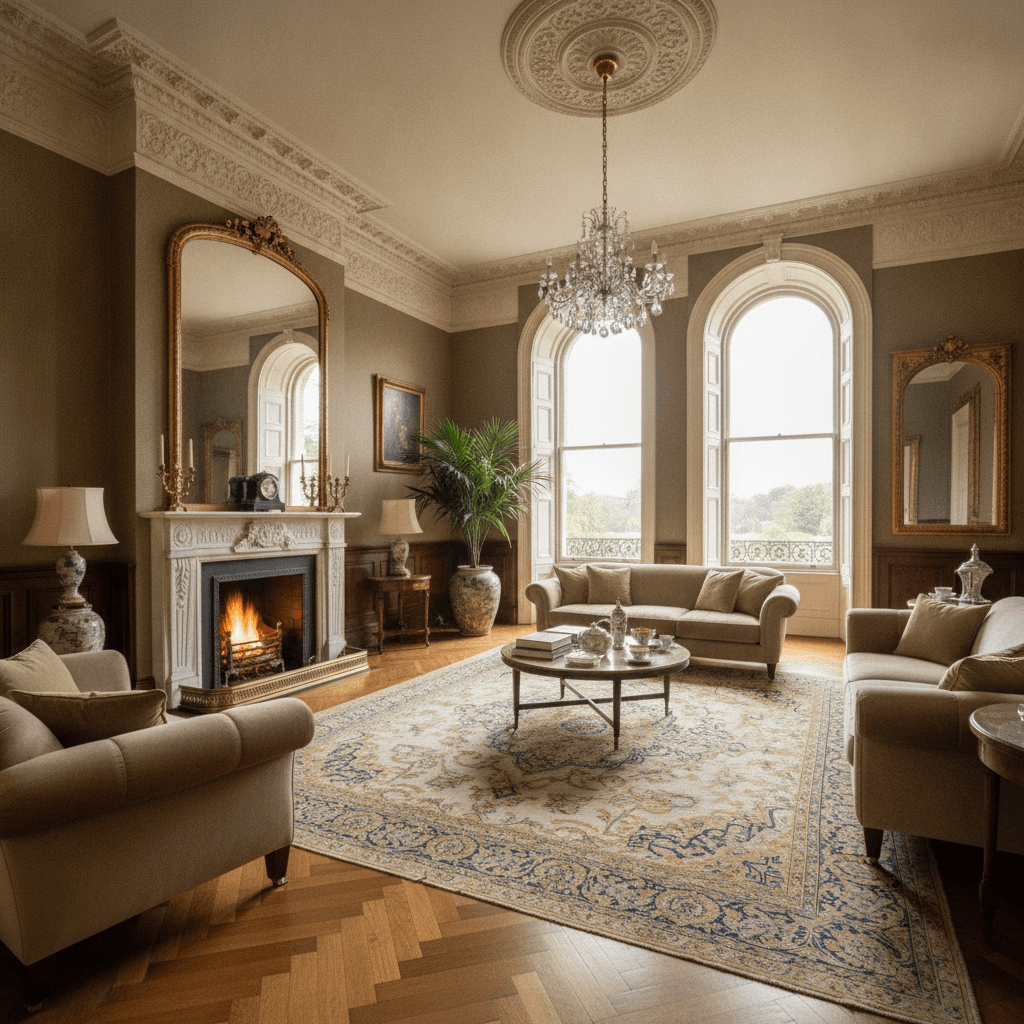
Torquay grew up grandly in the nineteenth century, and the proof is all around you: handsome Victorian villas, Edwardian terraces and characterful period homes with the kind of features modern houses simply do not have. Living in one is a genuine pleasure, but these homes ask for a different sort of care than a new-build ever would. Original materials, delicate finishes and the quirks of older construction all reward a gentle, knowledgeable hand. As a family-run team of house cleaners in Torquay, we look after plenty of period properties across the town and wider South Devon, and we have learned what these homes love and what they cannot abide. Here is how to care for yours.
Sash windows and original glass
Sash windows are a glory of period homes and one of their more demanding features. The frames, runners and glazing bars collect dust and, near the coast, a film of salt that returns quickly. Clean the glass with a soft cloth and a gentle solution rather than anything harsh, and take care around old putty and painted timber, which can lift if scrubbed aggressively. The runners benefit from gentle dusting rather than soaking, since trapped moisture is the enemy of old wood. Sea-facing sashes in particular need regular, careful attention to stay clear.
One thing we see again and again is paint damage caused by cleaning cloths that are too wet. The cloth looks barely damp, but water wicks along the grain of the glazing bar and sits behind the paint film. Over several visits that moisture builds up and the paint starts to bubble or peel from the bottom of the bar upward. A cloth that is wrung out very firmly, almost dry, is the right tool. Work from top to bottom and dry as you go.
Original wood and tiled floors
Period homes often hide beautiful original floors, whether wide timber boards or Victorian encaustic tiles in a hallway. These deserve respect.
- Wood floors- avoid soaking them. Excess water is the quickest way to damage old boards and lift a wax or oil finish. A barely damp mop and a product suited to the finish is far safer.
- Tiled floors- original encaustic and quarry tiles are often unsealed or sealed with traditional finishes. Harsh acidic or strongly alkaline cleaners can dull or etch them, so gentle, appropriate products matter.
- Test first- on any original surface, it pays to test a product in a quiet corner before committing.
The width of old floorboards matters more than people realise. Modern engineered boards are narrow and dimensionally stable. Original Victorian boards are often very wide, sometimes twelve inches or more, and they move with changes in humidity. A floor that is regularly soaked and then dried out will eventually develop gaps, cupping or raised grain that no amount of sanding fully corrects. The rule is simple: the wider the board, the more cautious you should be with moisture.
With encaustic tiles, the pattern is in the body of the tile, not in a surface glaze, which sounds reassuring until you realise that the same porosity that makes the pattern permanent also means they absorb cleaning products readily. Anything with a strong fragrance, a high alkaline content or an acidic base can leave a residue that dulls the surface over time. Plain warm water and a small amount of a pH-neutral soap is almost always the right answer.
Deep skirting boards, picture rails and cornicing
The generous joinery of a Victorian home is part of its character, and also a magnet for dust. Deep skirting boards, picture rails, dado rails and elaborate ceiling cornicing all collect a fine layer that a quick once-over misses entirely. These need patient dusting, often with a soft brush for the moulded details where a cloth cannot reach. It is slow work, but it is exactly what keeps a period room looking cared for rather than tired.
Cornicing deserves special mention. The run of a cornice in a Victorian room can be a foot deep or more, with a profile that includes ogees, beads and egg-and-dart details that trap dust in every recess. A feather duster shifts the surface dust but leaves the packed-in layer in the moulding untouched. A soft-bristled paintbrush, the sort sold for watercolours or fine detail work, is what actually reaches into those grooves without scratching the plaster. It takes patience, but the difference when it is done properly is immediately visible.
Fireplaces and original tiling
Many Torquay homes still have their original fireplaces, often with decorative tiled surrounds, cast iron and tiled hearths. These materials each want their own approach. Cast iron should be kept dry and dusted gently, as moisture encourages rust and harsh cleaners strip its finish. Original tiles can be wiped with a mild solution, but abrasive pads and strong chemicals can damage the glaze and any hand-painted detail. A soft touch preserves features that are genuinely hard to replace.
Cast iron grates and register fronts that are no longer in use still need attention. Dust settles into the decorative casting and, combined with the ambient moisture of a coastal home, can encourage surface rust to take hold. A dry dusting followed by a very light application of a protective wax keeps the metal stable. If the fireplace is used occasionally, ash should be removed promptly rather than left to sit, as the alkalinity of wood ash is unkind to surrounding tile and hearth stone over time.
High ceilings and the spaces you forget
Victorian rooms are tall, and that height creates places dust quietly accumulates out of sight: the tops of tall wardrobes and bookcases, ceiling roses, light fittings, the upper reaches of cornicing and cobwebs in lofty corners. Reaching them safely takes the right equipment and care, especially around delicate plasterwork. It is one of the areas where a professional team earns its keep, because doing it properly and safely in a high-ceilinged room is not a casual job.
Ceiling roses present a particular challenge. Original plaster roses were often built up in layers, with fine detail added by hand, and repairs are expensive and rarely invisible. A microfibre duster on a long handle, used with very light pressure, is sufficient for regular maintenance. What to avoid is anything that catches on the detail and applies lateral force, which can chip or crack the relief. If a rose has not been touched in years and has a significant accumulation, that is a job for a careful, methodical approach rather than a quick sweep.
Ventilation and condensation in older homes
Older properties were not built with modern damp-proofing and insulation, and on the South Devon coast, with its moist air and condensation, that matters. Poor ventilation lets moisture settle, which over time encourages mould in cool corners, on window reveals and behind furniture pushed tight to external walls. Caring for a period home is partly about managing this.
- Let rooms breathe- ventilate regularly, especially kitchens and bathrooms after use.
- Watch the cold corners- north-facing reveals and the backs of wardrobes are where condensation shows first.
- Wipe condensation- clearing morning moisture from sash windows protects the timber and the paintwork.
- Give furniture room- a small gap behind large pieces on external walls helps air circulate.
What the first visit to a period home actually involves
When we visit a period property for the first time, whether for a one-off deep clean or to start a regular arrangement, the first task is always a proper walk-through. That is not just politeness. It is how we learn which floors are original, where the fragile cornicing is, which tiles are unsealed, and whether there are surfaces that need a specific product or approach. A period home is rarely uniform: you might have original encaustic tiles in the hall, Victorian boards in the reception rooms, later ceramic tiles in a bathroom that was added in the 1930s, and modern flooring in a kitchen extension. Each area wants a different method, and getting that right on the first visit saves problems later.
We also note anything that already shows wear or minor damage before we begin, so there is no ambiguity about its condition. That is straightforward professional practice, but it matters particularly in homes where the surfaces are old and sometimes fragile. If anything is flagged within 48 hours of a visit, we put it right at no extra charge.
What to avoid
Much of caring for a period home is knowing what not to do. A few simple rules save a great deal of heartache.
- Avoid harsh abrasiveson original tiles, glazes and metalwork.
- Avoid soakingold wood floors, sash frames and unsealed surfaces.
- Avoid strong acidic or bleach-heavy cleanerson traditional materials without checking they are suitable.
- Avoid a one-size-fits-all approach- the surfaces in a period home are varied, and each wants the right method.
Why a careful, knowledgeable hand matters
The features that make a Victorian or Edwardian home special are, by their nature, old and often irreplaceable. A rushed clean with the wrong product can dull a hundred-year-old tile or mark original timber in a way that does not undo. That is why these homes reward experience and patience. Our cleaners are DBS checked and fully insured, we bring professional products suited to the surfaces in hand, and we are always happy to use your own or eco-friendly products on request, which many owners of period homes prefer. Where practical, the same trusted cleaner returns each visit, so they come to know your home's particular character and treat it accordingly.
If you are looking for cleaners in Torquay who understand what period homes actually need, rather than a team that treats every property the same way, that consistency of knowledge built up over repeated visits is worth a great deal. You can find out more about how we work on our about our family-run team page.
Frequently asked questions about cleaning period homes in Torquay
Can I use standard supermarket cleaning products on original Victorian tiles?
Most standard household cleaners are either mildly acidic or mildly alkaline, and used occasionally with plenty of rinsing, they are unlikely to cause dramatic damage. The problem with original encaustic or quarry tiles is cumulative: repeated use of the wrong product leaves a residue that builds up in the porous surface and gradually dulls the colour and texture. A pH-neutral cleaner designed for stone or traditional flooring is a small investment that protects something irreplaceable. If you are not sure what finish your tiles have, or whether they are sealed, test any new product in a corner that is normally hidden by furniture before using it across the whole floor.
How often should period features like cornicing and picture rails be dusted?
In a lived-in home, every four to six weeks is a reasonable interval for the detailed dusting of moulded joinery and plasterwork, assuming rooms are ventilated well and not unusually dusty. Leave it much longer and the accumulation becomes harder to shift without more effort, and there is a greater temptation to apply more pressure or a damp cloth, both of which carry more risk on old surfaces. High-traffic rooms and any room with an open fire or log burner will need more frequent attention because soot and particulates travel further than people expect.
Is a deep clean suitable for a period home, or is it too intensive?
A deep cleaning in Torquay for a period property is absolutely worthwhile, but it does need to be approached with the right knowledge. A deep clean in a modern home might involve steam, strong degreasers and abrasive pads without any concern. In a period home, those same methods could damage original surfaces. When we carry out a deep clean in a period property, we adjust our methods and products to suit what is there: more time spent on cornicing with brushes, careful hand-cleaning of original tile rather than machine scrubbing, and dry or barely damp methods on old boards. The outcome is the same thorough result, arrived at by a more considered route.
What should I do about mould on a window reveal in an old house?
The first step is to address the mould itself with a mild solution suited to the surface: a dilute white vinegar solution works on plaster and painted surfaces without bleaching or damaging old paint the way strong bleach-based products can. Wipe it away, dry the area thoroughly, and then improve the ventilation in that room so the conditions that caused it are less likely to return. If the mould is persistent despite good ventilation, it suggests a cold bridge or a level of moisture in the wall that goes beyond surface condensation, and that is worth discussing with a builder or surveyor. Cleaning is the right short-term response, but it is not a permanent solution if the underlying cause is not addressed.
Do you cover other period property areas beyond Torquay?
Yes. We cover Torbay and a wide area of South Devon, including many towns with significant Victorian and Edwardian housing stock. Totnes in particular has a large number of period properties, and we provide regular and deep cleaning there as well. You can see the full list of places we serve on our areas we cover page. If you are unsure whether your address falls within our area, the easiest thing is to give us a call and we will tell you straight away.
A period home in Torquay is a lovely thing to live in and a privilege to look after. If you would like a careful, knowledgeable team to help keep yours in beautiful condition, we would be delighted to help. Call us on 01803 500721 for a free quote and a friendly chat about your home.
Want a hand with your home?
Get a free, no-obligation quote from our friendly local team.